Ronald Reagan A Time for Choosing Speech (1964): Context and Rhetoric
A neutral historical reading of Ronald Reagan’s 1964 A Time for Choosing address: Goldwater campaign context, freedom, fiscal claims and persuasive technique.
Explore independent analysis and original explainers on this subject.
 22 ENTRIES
A neutral historical reading of Ronald Reagan’s 1964 A Time for Choosing address: Goldwater campaign context, freedom, fiscal claims and persuasive technique.
An independent guide to Barack Obama’s January 2017 Chicago farewell address: democracy, polarization, inequality, participation and rhetorical structure.
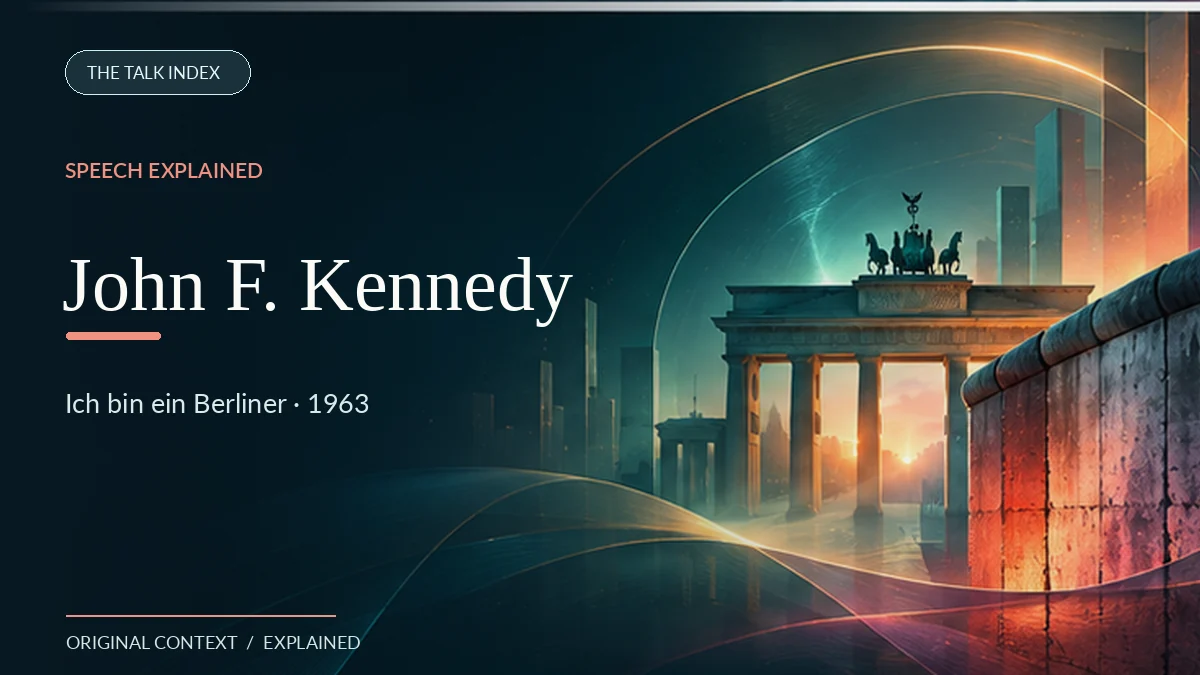
An independent analysis of JFK’s 1963 Berlin address: the Wall, Cold War solidarity, famous German phrase, rhetoric and historical limitations.
The Memphis sanitation strike, economic justice, rhetoric and biblical meaning of Martin Luther King Jr.’s April 3, 1968 Mountaintop speech.
Malala Yousafzai’s 2013 address to the United Nations Youth Assembly is more than the personal story of a survivor. She uses her experience of an attack to argue that education belongs to all children and that public institutions.
Greta Thunberg’s September 2019 UN Climate Action Summit remarks are notable for directing anger at political leaders rather than offering a comforting solution. The speech argues that promises must be judged against action and.
Harari asks why one species became capable of coordinating on enormous scales and shaping ecosystems across the planet. His account places shared stories, social institutions and collective belief at the center of humanity’s
Barack Obama’s 2004 Democratic National Convention keynote speech became a defining moment in his national political emergence. An effective analysis needs more than admiration for its delivery. The address uses personal.
Michelle Obama’s 2016 Democratic National Convention speech is a study in how political speakers move between the intimate and the institutional. She talks about raising her daughters in the White House and uses that experience.
Martin Luther King Jr.’s 1963 I Have a Dream address is often remembered as a general appeal to harmony. Its original setting makes it more demanding: the March on Washington for Jobs and Freedom sought civil rights, equal access.